Are You a Lindsey Vonn?
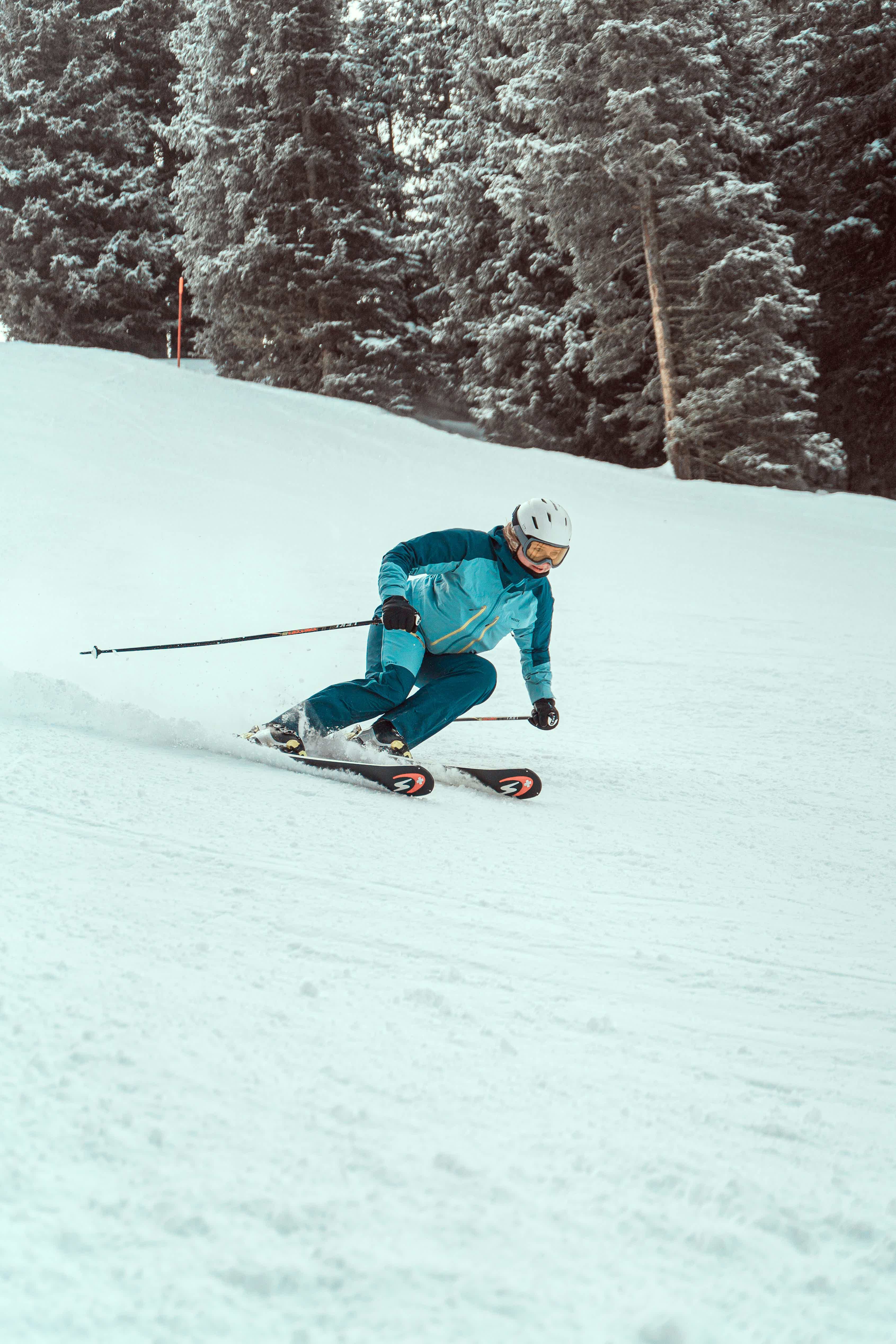
Often when I ski, I feel like I am Lindsey Vonn.
Plagued with knee injuries. Skiing despite the odds.
I may not have her style. Definitely not her speed. I do share her perseverance. And, possibly, her lack of patience.
And now, I share something else with her: the desire to ski without an ACL.
Reading Shandia’s article from Dale Charles in January’s edition really hit home for me. If you haven’t read it, grab one of the previous copies.She beautifully breaks down the many decision points that follow an ACL tear, which are far more complex than they used to be.
Years ago, the choice felt simple. I remember my surgeon asking me, over 30 years ago when I first learned about those three letters after my ski binding didn’t release and I had heard a pop: Do you want to ski again?
The implication was clear. Reconstruction surgery was the answer.
What I didn’t know then was what came with it. I had no idea I would be embarking on a 6 month journey of postoperative rehab. No one told me there was up to a 30% risk of re-tearing the ACL within the first few years, especially in high-demand sports like skiing. There was no mention that over 50% of people with an ACL injury will show signs of knee osteoarthritis within 10–20 years, regardless of whether they have surgery or not. And no one talked about how skiing with its rotational forces, sudden deceleration, and variable terrain places uniquely high demands on knee stability. I never imagined that my focus would shift from choosing skis to choosing braces, supportive leggings, and ice machines just to keep going.
Fast forward a few decades.
Over the past twenty years, my understanding of knee health has fundamentally changed. I’ve learned that it’s rarely just about the ligament that tore. Ligaments function as a system, and even small amounts of laxity in the supporting structures can quietly alter joint stability, load distribution, and movement patterns.
Imaging can tell us if something is torn, but it doesn’t tell us how well a knee is functioning. MRIs often miss subtle stretching in supporting ligaments. This laxity affects how muscles fire, how force is absorbed, and how a joint ages over time. Those small, often overlooked shifts can set the stage for chronic pain and eventually arthritis.
That’s why I approach pain differently now. I look beyond a single structure and up the chain. I think about stability, neuromuscular control, and how to support tissue health. Treatments like Prolotherapy and PRP aren’t about fixing something “broken”. When Regenerative Injections are paired with the right physiotherapy, the joint doesn’t just heal. The joint and body relearns how to move well, which is where real improvement happens. Some experts on knees say that ACL injuries don’t just come from a crash but there were warning signs that the kinetic chain was weak. The answer is no longer simple and that’s exactly why it works better.
Anyone who has worked with me during my own rehab would tell you: patience has never been my strong suit. I’m not deciding whether to race in the Olympics like Lindsey. I am not faced with a single shot on the world stage after retirement. But I also don’t sit well on the sidelines waiting for an injury to “just heal.”
I don’t use anti-inflammatories to mask swelling. Instead, I focus on supporting the healing process: maximizing smooth rotations on the bike, using the pool for weightless movement, and accessing tools like photobiomodulation (laser therapy). And hopefully wiser than my younger self, I respect that critical six week window to let swelling settle before truly testing the knee again.
Because for me, skiing isn’t a moment. It’s a lifetime sport. Something I love to share with my family. And something I want to be doing for decades not just one more season.
Once the acute phase of a ligament injury has passed, the most important predictor of how well you’ll do isn’t the MRI, it’s stability.
Do you get those “whoops” moments?
Does the knee feel like it might give way?
Does it swell after you push it a little too far?
If you’re answering yes to any of these, that’s your signal.
That help might be more targeted rehab and physiotherapy. It might be regenerative injections to support ligaments and tendons. And yes, sometimes it is surgery. The key is making that decision with a team that understands you, your goals, and the demands of skiing.
If you’re navigating an ACL injury, chronic knee pain, or that grey zone of “Can I keep skiing like this?” you don’t have to figure it out alone. You may not have access to world-class trainers or the immediate injections that keep elite skiers competing at the highest level, but that doesn’t mean you have to navigate an injury blindly. The Injury Guidebook breaks down what to do and what to avoid in the early days after an injury. It even tackles whether it’s time to finally shelf the traditional RICE protocol, so you can make smarter decisions right from the start, even from the comfort of your own home while watching the Olympics.
You can download the INJURY CHECKLIST GUIDEBOOK
To gain clarity, confidence, and a roadmap for making decisions that support lifelong skiing and not just a quick return to the hill.
Now, I see things differently. Others who watch me ski might disagree. But perception is everything. And somehow, now more than ever, I feel even more like her.